

Every July, we joyfully celebrate disability culture and empower each person to embrace their strengths. Disability Pride Month is celebrated to commemorate the achievements of people with disabilities.
Not only does this month recognize the contribution that the disability community offers to our country, but it also serves to bring awareness to disability rights, inclusion, and acceptance. While vibrantly honoring the progress within this community, we are reminded annually that our work is not yet done.
In this blog, we will discuss:
- How did disability pride month start?
- Why is it called disability pride?
- How do I celebrate disability pride?
- What is the disability pride month flag?
How did Disability Pride Month start?

In the 1960s, the United States was home to the Civil Rights Movement. During the fight against racial injustices, advocates found it appropriate to fight for disability justice as well. The Disability Rights Movement took place this same decade, and minorities stood together to demand equal treatment and access in every area of life.
People with disabilities were often excluded or hidden from public life, denied education and workplace opportunities, and were seen as less worthy than their non-disabled peers. After years of fighting, the Americans with Disabilities Act (ADA) was signed on July 26, 1990, by George W. Bush. This act prohibited discrimination against individuals with disabilities in the workplace, transportation, and other public accommodations.
July 26th became National Disability Pride Day, first celebrated in Boston! Over the next 25 years, this day celebrated human diversity and the signing of the ADA Act. In 2015, this holiday expanded from one singular day of recognition to an entire month of celebration. Festivities have taken the form of workshops and dance parties- and major cities like San Francisco, Philadelphia, Los Angeles, and New York City host large parades.
Why is it Called Disability Pride?
To have pride is to be proud of something. Disability pride recognizes one’s disability as an essential part of who they are and as something to be proud of! This community upholds intersecting identities – knowing that someone’s disability shouldn’t be separated from their identity but rather should be celebrated. This counters negative views of disabilities and the shame that people try to place on some diagnoses. Replacing indignity with honor shows that disabilities are both a natural and beautiful aspect of human diversity!
How To Celebrate Disability Pride

Not only should you celebrate Disability Pride Month with local festivities, but you should also celebrate through education.
Further honor disability culture by:
- Learning about disabilities, their history, and the history of Disability Pride Month.
- Share your disability story and encourage others to do the same.
- Teach the next generation about the importance of disabilities and how to include disabled people.
- Hire people with disabilities and break stigmatism.
- Be an advocate and take action by talking to elected officials, donating to disability support organizations, and showing your pride.
As Nelson Mandela said, “Education is the most powerful weapon which you can use to change the world.” By gently and generously educating others, we can change the perceptions of disabilities and create a more inclusive community! Never stop showing your pride, and attend a Disability Pride event in your community this July.
What is the Disability Pride Month flag?
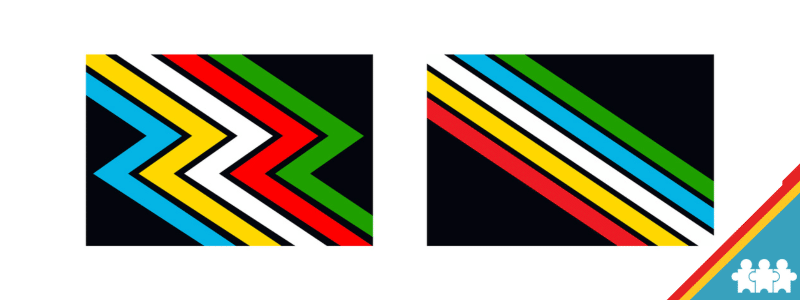
The disability pride month flag is a zig-zagged pattern over a dark background. Each color was carefully picked to represent a different category of disability. These colors include:
- Green: representing sensory perception disabilities. Disabilities in this category include hearing loss, visual impairment, and sensory processing disorder.
- Red: representing physical disabilities. Included in this is chronic pain, limb loss, or mobility impairments.
- White: representing undiagnosed or invisible disabilities. Many people suffer from disabilities that go unseen or are yet to be diagnosed.
- Yellow: representing cognitive and intellectual disabilities. Neurodivergent disorders comprise most of this category, including ADHD, autism spectrum disorder, and dyslexia.
- Blue: representing mental illness. Psychiatric disabilities include depression, PTSD, and anxiety.
The zig-zagged, or lightning bolt, shape of the colors symbolizes the way people with disabilities have to cut through societal barriers such as acceptance and inclusion.
The charcoal background honors disabled people who have lost their lives due to violence, negligence, or suicide.
Each detail of this flag was carefully selected to represent the struggles of having a disability and to recognize every unique impairment!