• Skip to main content
  • Services
    • ABA Therapy Treatment Services
  • What is Autism?
    • What is ABA Therapy?
  • Resources
    • Our Blog
    • News
    • Pay Bill
  • Locations
    • Ahwatukee
    • Arrowhead
    • Chandler
    • Deer Valley
    • Gilbert
    • Mesa
    • Central Phoenix
    • Surprise
  • About Us
    • Our Team
  • Contact Us
Ally Pediatric Therapy is now part of ACES ABA

Together, we’re expanding access to high-quality ABA therapy in Phoenix. We’re open and actively accepting new ABA clients.

Learn what this means for your family →
  • Services
    • ABA Therapy Treatment Services
  • What is Autism?
    • What is ABA Therapy?
  • Resources
    • Our Blog
    • News
    • Pay Bill
  • Locations
    • Ahwatukee
    • Arrowhead
    • Chandler
    • Deer Valley
    • Gilbert
    • Mesa
    • Central Phoenix
    • Surprise
  • About Us
    • Our Team
  • Contact Us
602-606-2237

Search Results for: activities

Occupational therapy (OT) activities can be incredibly beneficial for children, helping to develop motor skills, enhance sensory processing, and foster social interactions—all while having fun. Best of all, many OT-inspired activities can be done right in the comfort of your home, creating an opportunity for meaningful connections between parents and children.  

This guide lists and explains ten engaging, therapeutic activities you can try at home, designed to provide fun and support to children, including those on the autism spectrum.  

Why Are OT Activities Important?  

Occupational therapy for children focuses on helping them develop the skills they need for day-to-day life, from improving fine motor abilities to better understanding sensory input. Whether your child has sensory sensitivities, motor skill delays, or just needs additional structured play, OT activities can aid their development in a positive, playful way.  

These exercises don’t just build essential skills; they can also reduce stress, encourage creativity, and provide enjoyable bonding moments for the whole family.  

10 Engaging OT Activities to Try at Home  

Here’s a list of ten fun and therapeutic OT activities designed to engage your child while meeting developmental milestones.  

1. Create a Sensory Bin  

Sensory bins are a go-to OT activity because they are easy to customize and endlessly engaging. Fill a shallow bin with items like rice, beans, water beads, or sand. Add small toys, spoons, and cups for scooping. Encourage your child to explore different textures while engaging in tasks like hiding and finding small items or sorting objects by color or shape.  

Skills Developed: Sensory exploration, manipulation, and focus  

2. Obstacle Course Adventures  

Turn your living room or backyard into an obstacle course using cushions, chairs, jump ropes, and more. Create challenges like crawling under a table, balancing on a plank, or hopping between cushions. You can easily adapt the course to your child’s abilities.  

Skills Developed: Gross motor skills, spatial awareness, and problem-solving  

3. DIY Playdough Fun  

Making homemade playdough is a fantastic sensory activity that also enhances fine motor development. Combine flour, salt, water, and food coloring to create dough your child can knead, roll, and shape. Try adding scents like vanilla or lemon for extra sensory stimulation.  

Skills Developed: Fine motor skills, tactile sensory input, and creativity  

4. Bubble Wrap Stomp Party  

Place bubble wrap on the floor and encourage your child to stomp and pop it. For extra fun, tape strips of bubble wrap down a hallway and have a stomping race. If your child prefers quieter activities, encourage calm, finger-pressed popping instead.  

Skills Developed: Coordination, sensory processing, and balance  

5. Water and Pouring Station  

Set up a water station outdoors or in an easy-to-clean area using containers of different shapes and sizes. Allow your child to fill, pour, and transfer water back and forth. Adding food coloring to the water can make it even more visually stimulating.  

Skills Developed: Fine motor skills, hand-eye coordination, and spatial awareness  

6. Slime Exploration  

Slime is an OT favorite! Its squishy, stretchy texture provides an incredible sensory experience. You can make slime at home using glue, food coloring, and a saline solution, or purchase pre-made slime. Encourage your child to stretch, squish, and manipulate the slime however they like.  

Skills Developed: Tactile sensory exploration and creativity  

7. Finger Painting with Purpose  

Bring out finger paints and some large sheets of paper. Encourage your child to draw shapes, mix colors, and create patterns using their hands. This messy but rewarding activity promotes self-expression and sensory engagement.  

Skills Developed: Visual-motor integration, creativity, and hand strength  

8. Weighted Blanket “Caterpillar Time”  

Create a calming, deep pressure experience by wrapping your child in a weighted blanket to look like a caterpillar in a cocoon. Accompany the activity with a story about transformation or rest. Weighted blankets can have a soothing effect, helping children regulate their sensory systems.  

Skills Developed: Deep pressure therapy for anxiety reduction and self-regulation  

9. Yoga Poses with Visual Flashcards  

Yoga combines gentle movement and mindfulness, which can benefit children both mentally and physically. Use yoga pose flashcards to guide the session and create a fun interactive experience. Poses like “Tree” or “Butterfly” offer both balance and relaxation.  

Skills Developed: Body awareness, balance, and mindfulness  

10. Freeze Dance Painting  

Put on some music, cover your child’s feet in washable paint, and encourage them to dance on a canvas or large piece of cardboard. Pause the music for your child to freeze, leaving unique paint patterns on the canvas.  

Skills Developed: Gross motor movement, self-expression, and cause-and-effect learning  

Tips for Effective OT Play at Home  

  • Adapt Activities to Fit Your Child’s Needs: If an activity is too advanced or too simple, modify it. For example, if your child struggles with finger painting, try using brushes or tools instead. 
  • Create a Routine: Set aside specific times for these activities to provide structure and consistency. 
  • Keep the Environment Calm: Ensure the space is distraction-free and designed for your child’s comfort. 
  • Celebrate Small Wins: Acknowledge progress, no matter how small—it helps build your child’s confidence and motivation. 

The Importance of Sensory Activities for Children  

For children on the autism spectrum, sensory play supports vital developmental areas like motor skills, language, and emotional regulation. These activities can reduce anxiety, improve focus, and create a better sense of calm. Engaging in this kind of play also helps build a strong foundation for long-term skills.  

To make the most of these activities, consult with an occupational therapist who can provide personalized suggestions tailored to your child’s needs.  

Empower Your Child Through Play  

Implementing sensory and OT activities at home doesn’t have to be complicated or stressful. With the right tools and guidance, you can create an environment filled with joy and learning opportunities for your child.  

Remember that every child is unique, and progress happens at their own pace. Celebrate the moments of connection, growth, and accomplishment that these activities foster.  

If you’d like expert advice or tailored recommendations, connect with a pediatric occupational therapist near you. Together, you can set goals and explore more ideas to help your child thrive in fun and meaningful ways.  

Related Articles 

  • Sensory Play and Activities for Children 
  • What is Pediatric Occupational Therapy?
  • Does Your Child Need Occupational Therapy?

Filed Under: Autism, Developmental Disorders Tagged With: Activities, Parent Resources, sensory processing

Engaging in sensory play is a way for children and their families to spend time experiencing new things together. Developing your child’s gross motor skills and sensory processing can be challenging if there is no structure for them to practice. Luckily, there are endless sensory activities for children that are easy and fun.

In this guide to keeping sensory stimulation constructive and enjoyable, we’ll cover the following:

  • What is sensory for autism?
  • How to help overstimulation in autism.
  • What are sensory activities for children?
  • Sensory activities in ABA therapy.
  • Why is sensory learning important for Autistic kids?
  • 14 fun sensory activities for Autistic children.

What Is Sensory for Autism?

Autism spectrum disorder (ASD) can make children hypersensitive to their environment. While trying to process sensory information, the child may decide that there is too much or too little. Too much sensory input may make your child anxious, irritable, or experience physical pain/discomfort.

With too little sensory input, your child may use stimming (such as rocking or making loud noises) to stimulate the area around them. To help regulate this, you can create a sensory workspace for your child to play in and enjoy comfortably. 

How To Help Overstimulation in Autism

Too many sounds. Too many people. Too much information. Sensory overload can quickly lead to overstimulation for autistic children. Paying attention to deep pressure and deep breathing can help ground your child and destimulate their senses. 

Using a weighted blanket as a pressure tool can create a more enjoyable sensory experience, as your child can be soothed by the pressure being equally distributed across their body. Additionally, focus on creating a calming environment and box of tactile objects to play with whenever needed.

What Are Sensory Activities for Children?

Sensory activities (or sensory play) are when we can create interactive methods of learning that encourage growth in sensory processing. Often, these activities focus on the following:

  • Tasting
  • Hearing
  • Stimulating touch
  • Sight
  • Smell  

In addition to these basic senses, activities can help your child learn complex topics and compound movements- all while having fun. Most importantly, for autistic children, sensory play can be a great addition to an ABA framework focused on specific behavioral skills or daily life applications.

Sensory Activities in ABA Therapy

Sensory play is an incredibly effective and dynamic way for an autistic child to learn new skills and develop existing ones. Even better, sensory activities are a common and integral portion of many ABA frameworks that licensed therapists provide.

When looking for potential ABA therapy for your child, ask about sensory play and how they integrate it into programming. This will allow you and your child’s therapist to plan for sensory play across multiple environments. You can educate caregivers, teachers, and family members on incorporating sensory play into the time spent with your child. There are endless benefits of sensory activities!

Why is Sensory Learning Important for Autistic Kids?

Sensory learning benefits all children, but developing specific skills within an ABA framework for autism can be incredibly effective.

These types of targeted developments can include:

  • Language development
  • Cognitive growth
  • Motor skills
  • Balance abilities
  • Social interaction
  • Peer engagement
  • Observational skills
  • Social interaction

In addition to these complex behavioral troughs, sensory play and associated activities can be great for relieving anxiety, helping with depression, or creating healthy routines. Talk to your ABA therapist or clinician about generalizing these activities across environments for long-term success.

14 Fun Sensory Activities For Autistic Children

One of the most rewarding aspects of sensory activities is that they are supposed to be fun, dynamic, and accessible for parents, teachers, and educators to enjoy alongside their child. These activities can be enjoyed across many environments.

Here are fourteen great sensory play activities:

  1. Mud Kitchen: One of our favorite outdoor sensory activities, making a mud kitchen is perfect for creativity and getting messy. Make mud using water, bowls, dirt, or clay, and shape it into ovens, dishes, foods, or any shapes your child pleases.
  2. Water Beads: Water beads are non-toxic toys that allow children to squish them around in their hands. They can be refrigerated to create temperature contrast, and counting them or making designs is a significant cognitive addition to the activity.
  3. Finger Painting: Finger painting is an excellent way for your child to express themselves. It also helps teach colors and combines organization with manual dexterity skill-building. This can be taken both indoors and outdoors!
  4. Homemade Scented Playdough: Taking existing playdough and adding homemade scents such as lemon, cinnamon, vanilla, or any other natural flavoring can be incredibly fun for the whole family. Bonus points if you make the base playdough yourself!
  5. Pouring Station: A pouring station is a fantastic way to practice fine motor skills and teach special awareness to autistic children. Set up different-sized jugs and containers outdoors and let them pour one into the other to see how they fit and how water moves, and enjoy the sensation and sounds of rushing water.
  6. Food Play: Many autistic children have issues with the textures, tastes, and colors of certain foods, which leads them to be wary of new dishes. Playing and interacting with food can help eliminate these picky eating habits, turning eating time into a fun, interactive experience. We recommend you do this in the yard when the weather is nice for minimal mess.
  7. Rainbow Sensory Glitter: Glitter is a great sensory activity, but we also know glitter indoors is a recipe for disaster. This is why when the weather is nice, you can put down cardboard and let your child create color-coded glitter sections or draw with glitter to learn about shapes and different textures while having fun in the sun.
  8. Ice Smash: Freeze marbles, toys, or even food inside ice cubes, and then let your child deconstruct the cubes outside. They can crush them, let them melt, or run water over them – the ways to play are nearly limitless in this temperature and touch-based activity!
  9. Yoga Flashcards: The outdoors, exercise, and organized learning combine with yoga flashcards. Furthermore, this is an activity that parents and caretakers can join in on and get benefits, making it a win/win for the entire family!
  10. Freeze Dance Painting: A modern take on freeze tag, this sensory-based skill builder is so much fun! Have your child choose their favorite paint and lay a canvas or cardboard down. Apply the paint to the bottoms of their feet and create different patterns by dancing until the music stops.
  11. Glitter “Calm Down” Bottles: If you don’t want to take on the mess of loose glitter, make a glitter bottle! With your bottle size of choice, combine equal parts distilled water and glue, add in your glitter, and fill the rest of the bottle with water. Add small toys such as beads or small buttons if you want extra pizazz. Remember- hot glue the cap of the bottle shut! This way, the contents of the bottle can’t be spilled.
  12. Bubble Wrap Stomp Painting: Bubble wrap is always fun! Take a spin on this simple packing, and use it to paint. Wrap it around your child’s foot, lay out a large strip of paper, step in some paint, and create! If bubble wrap causes sensory troubles, paper towels are a great alternative.
  13. Slime: You can never go wrong with this ooey-gooey fun. Whether you make it at home or buy it from a local store, your child can explore textures and object manipulation.
  14. Foam Fireworks: With shaving cream and some drops of food coloring, your child can create firework-looking explosions on their plate. If your child struggles with loud noises, this is a way to bring fireworks home without the boom.

These are just fourteen of our favorite sensory play ideas, but there are many more creative ones that you and your family can invent. That’s part of the joy of sensory learning – once you see the best way your child can connect and grow while playing, it is a reward to add to the experience.

Published On: July 25, 2022
Updated On: July 14, 2023

Filed Under: ABA Related, Autism

The change of seasons brings excitement to everyone: the promise of crisp air, pumpkin spice, and, of course, Halloween! However, for many families in the Phoenix Metropolitan area, the noise, flashing lights, and crowds of traditional fall festivals and trick-or-treating can feel less like fun and more like a sensory overload. 

At Ally Pediatric Therapy, we know that every child deserves a chance to celebrate comfortably. That’s why we’ve compiled your ultimate guide to the best sensory-friendly and autism-friendly fall events happening right here in the Valley! 

These intentional events provide a low-stress environment where your child can practice essential social skills, enjoy new experiences, and celebrate without being overwhlemed. 

The Importance of Inclusive Celebrations 

Sensory sensitivities are common for autistic children, single-parent households, and special-needs families. An environment with high noise volume, unpredictable lighting, strong smells, or long queues can lead to challenging behaviors and immense stress. 

The events listed below are designed to be low-key, predictable, and supportive, acting as the perfect setting for Natural Environment Teaching (NET) and Positive Reinforcement strategies you might be practicing at home. 

New to managing sensory challenges? Get practical tips in our article: What is Natural Environment Teaching? 

Sensory-Friendly October Events in the Phoenix Metro Area (2025) 

We’ve found a mix of dedicated autism-friendly events and options that offer quieter, less crowded experiences throughout the month.  

Please confirm all dates and details with the hosting organization before attending. 

Dedicated Sensory & Autism-Focused Events 

These events are specifically designed and hosted by organizations that prioritize the needs of the special needs community. 

Trunk or Treat - Ally Halloween 

Location: Ally Pediatric Therapy, Ahwatukee Clinic. 15220 South 50th St Building B Suite 103, Phoenix, AZ 85044

When: October 18th, 10:00am to 1:00pm

1. Ally Pediatric Therapy Ahwatukee Trunk-or-Treat

  • What it is: Join Ally Pediatric Therapy for our own inclusive, low-stress Trunk-or-Treat event! Our event is specifically designed to be sensory-friendly, offering a safe, predictable path for trick-or-treating with staff and families. It’s the perfect place for your child to practice wearing a costume and engaging in communication skills like requesting and thanking in a highly supportive environment. 
  • Location: Ally Pediatric Therapy, Ahwatukee Clinic. 
  • When: October 18th, 10:00am to 1:00pm 
  • Why we love it: This is a safe space hosted by the Ally team you know and trust. It provides an ideal opportunity for autistic children to practice generalization of skills outside of their regular therapy room, while connecting with the broader Ally community. 
  • Event Details Link: Ally Pediatric Therapy Facebook Events Page (Check for 2025 details) 

2. Fall on the Spectrum Family Autism Festival 

  • What it is: An annual, large-scale autism-friendly festival with dedicated sensory management. Activities typically include a petting zoo, carnival games, bounce houses, live kid-friendly entertainment, and a resource fair—all in a judgment-free, safe space. They often include a dedicated quiet zone for necessary breaks. 
  • Location: Chateau Luxe, Phoenix. 
  • When: October 19th, 2:00pm to 6:00pm 
  • Why we love it: This is a comprehensive event where your whole family can relax and connect with other families and resources. The organizers are highly intentional about making it stress-free. 
  • Event Details Link: The Autism Nation Eventbrite Page 

3. Inclusive Neuroverse Sensory-Friendly Fall Festival 

  • What it is: A smaller, community-focused festival offering inclusive activities like carve-free pumpkin decorating, coloring pages, and allergen-friendly & non-edible treats from local vendors. They also have a dedicated sensory room and fidgets available for autistic children and those with sensory needs. 
  • Location: West Dunlap Avenue, Phoenix. 
  • When: October 11th, 10:00am to 1:00pm 
  • Why we love it: The focus on non-edible and allergen-friendly treats makes the experience inclusive for children with dietary restrictions, eliminating potential challenges before they start. 
  • Event Details Link: Inclusive Neuroverse Instagram Post 
Yes Day! Walk for Autism SARRC

4. YES Day Walk for Autism & Resource Fair 

  • What it is: This event often includes a one-mile walk for all abilities, a carnival/kid’s zone, entertainment, and, significantly, a complimentary pumpkin patch and no-carve decorating station. They also offer a dedicated quiet zone for families. While you’re there, come say hi to the Ally team located at our booth along the walk! 
  • Location: Tempe Beach Park 
  • When: October 16th, 9:00am to 12:00pm 
  • Why we love it: It perfectly blends light physical activity, fun sensory engagement (pumpkin decorating), and critical social connections. 
  • Event Details Link: SARRC 5th Annual Yes Day 

5. Sensory Friendly Trunk or Treat (Surprise) 

  • What it is: The Autism Society of Greater Phoenix (ASGP) and T.E.A.M. 4 Kids Pediatric Therapy often team up for a safe, Sensory Friendly Trunk or Treat in the West Valley. This event is typically free and open to all ages and abilities, focusing on fun without the spooks and scares. 
  • Location: T.E.A.M. 4 Kids Surprise location. 
  • When: Saturday, October 18th, 9:00am to 11:00am 
  • Why we love it: It’s an accessible way for West Valley families to practice vital social skills like turn-taking and accepting novel items. 
  • Event Details Link: Autism Society Trunk or Treat RSVP
Glowing Pumpkins image

Sensory-Conscious & Quiet Time Options 

These major venues offer scheduled times or inherently gentle experiences that reduce typical event stressors. 

6. Special Night of Play – Halloween Edition 

  • What it is: An inclusive, sensory-conscious event at the Children’s Museum of Phoenix. The museum is explored in a less-crowded, calm environment compared to regular business hours. For Halloween, they often offer trick-or-treating through the exhibits. Reservations are typically free but required. 
  • Location: Children’s Museum of Phoenix (Downtown Phoenix). 
  • When: Saturday, October 26th, 4:30pm to 7:30pm 
  • Why we love it: The museum is inherently interactive and hands-on, making it great for tactile sensory input in a predictable, low-noise setting. 
  • Event Details Link: Downtown Phoenix Inc. Special Night of Play Details 

7. Peoria’s Halloween Monster Bash Sensory Room 

  • What it is: This large community event typically includes a dedicated Sensory Room for children, teens, and adults with sensory processing needs. The room is equipped with noise-canceling headphones, weighted blankets, plush chairs, and soft toys—a vital resource amidst the main party. 
  • Location: Peoria Sports Complex (Peoria). 
  • Why we love it: The provision of a dedicated retreat means families can attend the fun while knowing they have a predictable escape route when the environment becomes too stimulating. 
  • Event Details Link: City of Peoria Monster Bash Page 

8. Glowing Pumpkins at Riverwalk 

  • What it is: A magical, non-scary walk-through event featuring trails lined with over 5,000 intricately illuminated, hand-carved pumpkins. It includes music and thematic soundscapes, but the focus is on a stunning visual experience rather than jump-scares. 
  • Location: Riverwalk at Rawhide (Chandler/Scottsdale area). 
  • Why we love it: This offers wonderful visual stimulation and a festive atmosphere that is generally less frantic than a traditional festival. Going right at the start time can help manage any potential crowding. 
  • Event Details Link: Riverwalk at Rawhide Glowing Pumpkins Event 

9. Jack-O-Lantern Jamboree 

  • What it is: A family-friendly Halloween variety show at a local puppet theater. Puppet shows are often a great way to introduce social scripts and storytelling in a contained, dimly lit, but non-scary environment. 
  • Location: Great Arizona Puppet Theater (Phoenix). 
  • Why we love it: A unique, seated experience perfect for autistic children who are learning to attend to a performance and engage with imaginative play. 
  • Event Details Link: Great Arizona Puppet Theater Tickets Site 

10. Museum of Illusions Scottsdale (Trick Your Senses) 

  • What it is: This venue is inherently designed to trick the senses with mind-bending exhibits and is often less crowded than outdoor festivals. They typically add festive décor and trick-or-treating during regular hours in October, offering a unique, indoor Halloween outing that avoids typical sensory traps (loud music, heat). 
  • Location: Museum of Illusions Scottsdale. 
  • When: October 1st – 31st 
  • Why we love it: It offers controlled novelty and visual exploration—a great way to explore sensory input without the chaos. 
  • Event Details Link: Visit Phoenix Museum of Illusions Event Page 

11. Tolmachoff Farms Pumpkin Days & Corn Maze (Early Weekdays) 

  • What it is: While a traditional farm experience, the key here is timing. Visit during early weekday mornings or right when they open to avoid weekend crowds, loud music, and long lines. The farm offers large, open spaces. 
  • Location: Tolmachoff Farms (Glendale). 
  • Why we love it: Great for gross motor skills (running in the open field), proprioceptive input (carrying a pumpkin), and Natural Environment Teaching in an authentic fall setting. 
  • Event Details Link: Tolmachoff Farms Info 

Your Partner in Arizona: Ally Pediatric Therapy 

Navigating the world of special needs events requires planning, patience, and a deep understanding of your child’s unique needs. At Ally Pediatric Therapy, our dedicated team of Board Certified Behavior Analysts (BCBAs) and Registered Behavior Technicians (RBTs) are here to provide the year-round support that makes these wonderful community experiences possible. 

Our comprehensive ABA programs across the Phoenix Metropolitan area equip parents and autistic children with the communication, regulation, and social skills necessary to confidently engage with the world around them—whether it’s at our own Trunk-or-Treat or a local sensory-friendly event. 

Ready to gain the tools and support that make family outings less stressful and more fun? 

Your Next Step: 

Contact Ally Pediatric Therapy today to schedule a consultation at one of our convenient Arizona locations. Let us partner with you to unlock your child’s full potential. 

  • Visit us: allypediatric.com 

For more tips on setting your child up for success at these events, check out: 

  • ABA Therapy Basics: 10 Tips for Parents 
  • Preparing Your Child to Transition into a School Environment (Great tips for any big transition!) 

Filed Under: ABA Related Tagged With: Activities, Parent Resources, sensory processing

In our previous post, “Understanding Your Child’s Behavior: An Introduction to ABA Therapy for Arizona Families”, we explored the fundamentals of Applied Behavior Analysis (ABA) therapy and its transformative impact on children’s growth. While ABA therapy with professionals offers invaluable guidance, many of its core principles can become part of everyday family moments. At Ally Pediatric Therapy, we’re dedicated to helping Arizona parents feel supported, informed, and empowered as partners in their child’s journey.

You don’t need to be a therapist to put ABA principles into practice. Everyday routines—whether it’s snack time, getting dressed, or preparing for a new activity—create countless opportunities for growth, learning, and connection. This guide was written to give you practical, supportive tools you can use at home, based on compassion, patience, and consistency.

The ABCs in Action: Understanding Your Child’s Behavior at Home

Let’s take another look at the “ABCs of Behavior,” and see how understanding them can help you respond to your child’s needs in a caring, effective way:

  • Antecedents (What happens before): Recognizing what might set off a challenging behavior is a powerful step toward prevention. Is your child hungry, tired, frustrated by a change in routine, or overwhelmed by noise? For example, a child may have a meltdown after being denied a favorite toy.
  • Behaviors (The action itself): Describe the specific behavior. Instead of saying “acting out,” try noting what you see, like “yelling” or “dropping toys.”
  • Consequences (What happens after): What does your child experience immediately following the behavior? Attention, avoidance of an activity, or access to a desired object? If the result feels rewarding to your child, the behavior is likely to continue.

Observing these patterns—sometimes with help from a Functional Behavior Assessment (FBA)—gives you insight into why a behavior is happening. Understanding the “why” is key to nurturing more positive alternatives. You can learn more about FBAs and related topics in our post, Autism: Medical vs Educational Diagnosis.

Core ABA Techniques You Can Use Today for Positive Change

ABA offers practical, research-based techniques that help you encourage positive behaviors and meaningfully address challenges. Here are a few to try with your family:

1. Positive Reinforcement: Encouraging Every Win

Positive reinforcement is all about acknowledging desired behaviors so your child feels motivated to repeat them. A heartfelt “Great job!” or a small reward right after a positive action can be powerful encouragement.

  • Examples in Action:
    • If your child completes homework independently, celebrate with a favorite activity or a few extra minutes of screen time.
    • When they use polite language, offer both praise and perhaps a fun high-five.
    • Helping with chores, even small efforts, can be recognized with a sticker, a token toward a larger reward, or simply extra one-on-one time.
  • Tips for Success:
    • Make It Meaningful: Every child is unique. Pay attention to what truly excites or comforts them.
    • Be Immediate and Consistent: Deliver praise or the reward right away whenever possible to strengthen the connection.
    • Be Specific: Let them know exactly what you appreciate—“Thank you for putting away your toys so neatly!”

For deeper ideas on motivating your child, visit our article: What are ABA Teaching Strategies for Parents?.

2. Antecedent-Based Interventions (ABI): Preventing Challenges Before They Start

ABI involves gently adjusting routines or environments to help your child succeed before problems arise. Small, thoughtful changes can reduce stress and power struggles for everyone.

  • Examples in Action:
    • Visual Schedules: Use pictures or simple lists to outline daily activities. Visual structure helps many children—especially those with autism—feel more secure and prepared for transitions. Visual supports are proven to boost both confidence and independence. For tips, see: Preparing Your Child to Transition into a School Environment.
    • First/Then Boards: Present tasks as “First we do X, then we get to do Y.” For example, “First finish your meal, then we can read your favorite book.”
    • Offering Choices: Whenever possible, let your child choose between two options, such as what to wear or which activity to do first. Choices nurture confidence and cooperation.
    • Priming: Provide gentle warning before changes: “In five minutes, it’ll be time to clean up,” or “After the playground, we’re going grocery shopping together.” These heads-ups reduce anxiety and promote smoother transitions. For more on measuring age-appropriate and disruptive behaviors, check out: Disruptive versus Age Appropriate Behaviors in Early Childhood.

3. Skill-Building Strategies: Nurturing New Abilities Step by Step

  • Discrete Trial Training (DTT) at Home: While DTT is usually done in a clinical setting, you can use its principles to help your child learn basics by breaking tasks into small, achievable steps.
  • Example: If you’re teaching handwashing:
    1. “Turn on the faucet.” (Offer praise)
    2. “Wet your hands.” (Praise)
    3. “Add soap.” (Praise)
    4. “Rub hands together.” (Praise each step)

Continue until the skill becomes automatic, and then gradually ease back on rewards.

  • Natural Environment Teaching (NET) & Pivotal Response Treatment (PRT): These play-based strategies are wonderfully adaptable for home. NET follows your child’s interests, teaching skills naturally in daily life. PRT focuses on pivotal skills like motivation and self-initiation.
  • Example (PRT): If your child reaches for cookies, model language: “Do you want a cookie? Say, ‘I want a cookie’ or just ‘cookie.’” Respond enthusiastically to any effort—they’re learning! Explore these methods further in: What is Natural Environment Teaching? and How Natural Environment Teaching Enhances ABA Strategies.

The Indispensable Role of Consistency and Patience

Lasting progress takes time, understanding, and above all—consistency. When families practice the same strategies across all caregivers, children are more likely to grow in confidence and independence. Communicating expectations, routines, and responses clearly with all adults in your child’s life helps reinforce learning and reduces confusion.

Some days will bring quick wins while others may feel challenging. Celebrate every small success, and acknowledge that each step—no matter how tiny—is meaningful progress. When ABA strategies are woven into everyday routines with compassion and steadiness, children typically gain in self-regulation, language, and social skills. Over time, many parents see their child grow in determination, joy, and independence. For more on navigating tough behaviors or celebrating everyday milestones, see our article: Disruptive versus Age Appropriate Behaviors in Early Childhood.

Your Partner in Positive Change: Ally Pediatric Therapy in Arizona

At Ally Pediatric Therapy, we are devoted to supporting families with understanding, advocacy, and expert guidance. Our Board Certified Behavior Analysts (BCBAs) and Registered Behavior Technicians (RBTs) partner closely with parents through our comprehensive Parent-Implemented Intervention (PII) and training programs. We’ll help you weave these research-backed ABA strategies into your family’s routines in ways that feel natural and sustainable—always honoring your child’s individuality.

Every child has their own strengths, challenges, and pace. Whether you’re seeking to improve communication, broaden independence, or simply bring more harmony to your day-to-day, we’re here with practical, warm, and judgment-free support. Together, we can make a positive, lasting difference—for your child and your entire family.

Ready for compassionate expert support on your journey?

Learn More About Our Services in Arizona!

Contact Ally Pediatric Therapy today to schedule your consultation at one of our convenient Arizona clinics. Let’s inspire brighter tomorrows, together.

Filed Under: Uncategorized

Summer is here, and families with neurodivergent children may find planning activities challenging. But don’t worry—Phoenix offers plenty of inclusive, sensory-friendly events and spaces to ensure your family enjoys a joyful, memorable summer. From movies and museums to parks and splash pads, this guide highlights affordable and free options tailored for all children, ensuring they have a summer full of fun and exploration. 

Below, you’ll find a mix of venues, events, and pro tips to make your summer outings stress-free and enjoyable for both you and your child. 

Sensory-Friendly Fun with Movies & Museums 

Catch a Flick at Harkins Theatres 

Harkins Theatres provides Sensory Friendly Screenings every first Saturday of the month at 2 PM. These screenings feature adjusted lighting, reduced sound volume, and a relaxed environment where children can move freely. Families can also bring their own snacks, which is excellent for kids with dietary needs. 

Upcoming Sensory-Friendly Movies for Summer 2025: 

  • Smurfs (PG): Premiere on July 19, 2025 
  • The Bad Guys 2 (PG): Premiere on August 2, 2025 

Find participating locations and purchase tickets at the Harkins Theatres official website. 

Ticket Prices: 

  • $8.75 for children under 12 
  • $10.75 for ages 13 and older 

Explore & Learn at the Children’s Museum of Phoenix 

The Children’s Museum of Phoenix is designed with accessibility in mind, featuring calming sensory-regulation spaces, wide layouts, and well-trained staff. While specific sensory-friendly dates aren’t listed, their everyday focus on inclusivity ensures a positive experience at any time. Be on the lookout for their Special Night of Play, which is free and specifically designed for children with sensory sensitivities. 

Tip: Check their events calendar for updates, and consider visiting during non-peak hours for a calmer experience. 

Discover the Arizona Museum of Natural History 

Certified as an Autism Center, the Arizona Museum of Natural History offers sensory guides to prepare families for different sound, light, and touch levels across exhibits. Additional resources, such as noise-canceling headphones, light-filtering glasses, and designated quiet spaces, are available to ease potential sensory overload. 

Summer Highlights: 

  • The Art and Science of Storytelling (Saturdays in July) 
  • Dinosaurs After Dark (July 9, 16, August 13; 5 PM–8 PM) 
  • THRIVE Speaker Series (July 16 and August 13; 6 PM–7 PM) 

For details on events and admission, visit their Events page and Admissions page. 

Special Pricing: 

  • EBT cardholders: $2 entry through the “Museums for All” initiative 
  • Children under 2: Free 

Pro Tip: Quiet galleries on each floor allow families to take breaks as needed. Maps highlighting low-sensory zones are available at the entrance. 

Phoenix library sign

Library Adventures That Include Every Child 

Phoenix Public Library 

The Yucca Library branch stands out with weekly “Special Needs Storytime” sessions in a sensory-friendly setting. Visual schedules, calming lighting, and accessible storytelling ensure children of all abilities feel comfortable. 

Browse Phoenix Public Library’s Events page for general programs like “Music & Movement” (Thursdays) and “Craft & Create” (Saturdays), both of which are adaptable with advanced accommodation requests. 

Pro Tip: Contact the library at least 14 business days in advance at 602-262-4636 or use their accessibility request form to request sensory-friendly accommodations for any program. 

Scottsdale Public Library 

Scottsdale libraries offer “Sensory Storytime”, incorporating dim lighting, gentle music, and interactive elements for neurodiverse children. Additional summer activities include Kids Café, Music Fundamentals, and Family Storytime. 

Find the latest sensory-friendly events on the Scottsdale Public Library calendar. 

Phoenix splash pad

Outdoor Fun for Cool and Calm Play 

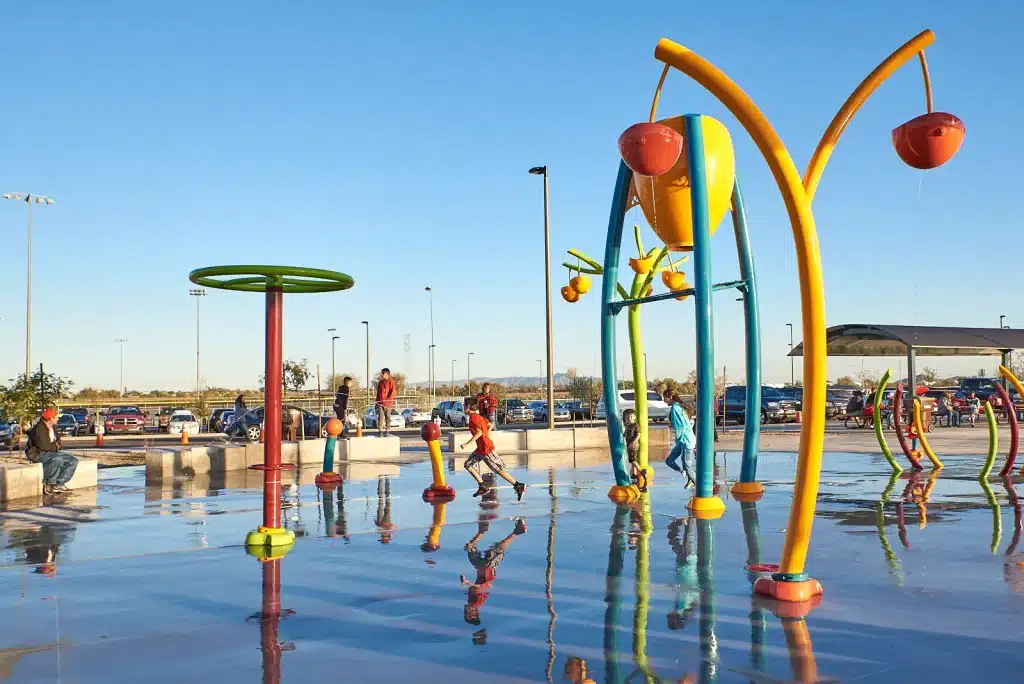
Beat the Heat at Phoenix’s Free Splash Pads 

Phoenix’s splash pads are open daily from 8 AM to 8 PM through October 1, 2025. These water features provide calming sensory input for children while keeping them active and engaged. 

Popular Splash Pads Include: 

  • Altadena Park 
  • Civic Space Park 
  • Pecos Park 

All splash pad locations are ADA-accessible and have shaded seating areas for cooling off. 

Enjoy Sensory-Friendly Parks 

  • Telephone Pioneers of America Park 

The first barrier-free park in the U.S., it includes wheelchair-accessible elements, a therapeutic pool, and quiet picnic areas. 

  • Encanto Park & Enchanted Island Amusement Park 

Vast green spaces and shaded trails make it ideal for family picnics. Enchanted Island within the park also hosts quiet rides and occasional sensory-focused events. 

  • Cesar Chavez Community Center 

Features a dedicated sensory room with interactive, calming features designed for individuals with sensory needs. 

Pro Tip: Early morning or evening visits are quieter and cooler, perfect for a more relaxed outing. 

Indoor Play with Sensory Considerations 

Trampoline and Adventure Parks 

Both Sky Zone Trampoline Park and Urban Air Adventure Park offer dedicated “Sensory Hours.” During these times, lights are dimmed, and noise levels are reduced to foster a comfortable and fun environment for children with autism. Check each location for specific dates and sensory hour offerings. 

Inclusive Community Events 

Autism Society of Greater Phoenix (ASGP) 

The Autism Society of Greater Phoenix (ASGP) organizes incredible family events tailored to the autism community. Upcoming offerings include: 

  • Elio Private Viewing Party (July 2025, Free): Enjoy a sensory-friendly movie screening in an accommodating, private setting. More info will be posted on their Events page. 
  • Red, White & Ice Skating Event (July 20, 2025; $5 per person): A cool, inclusive way to stay active while avoiding the summer heat. Walkers and skate helpers are available for extra support. Find registration details on their Events page. 

Pro Tip: Visit ASGP’s website regularly for updates on new events and registration details. 

Practical Tips for Autism-Friendly Outings 

Plan Ahead 

  • Confirm event details and tickets via the venue’s website before visiting. 
  • Pre-register for events with limited space to secure your spot. 

Prepare Your Child 

  • Create a visual schedule of planned activities for the day. 
  • Bring comfort items or snacks to help manage transitions and breaks. 

Leverage Accessibility Resources 

  • Borrow sensory tools like noise-canceling headphones or sensory maps available at some venues. 
  • Utilize designated quiet zones to take breaks when needed. 

Stay Comfortable 

  • Dress in light clothing and bring sunscreen to manage the Phoenix heat. 
  • Always keep water on hand to ensure hydration. 

Make This Summer Extraordinary 

Phoenix is leading the way in offering inclusive, autism-friendly activities for families. With careful planning and these helpful resources, summertime can be a season of joy, growth, and connection for your child. 

At Ally Pediatric Therapy, we are committed to helping families create meaningful, stress-free experiences. We hope this guide inspires you to explore these opportunities and make cherished summer memories. Have fun and enjoy every moment! 

Filed Under: ABA Related

Families in the Surprise, Arizona area recently came together for a heartwarming and inclusive event that celebrated community, growth, and connection. Ally Pediatric Therapy hosted a Fire House Fun Day!, a sensory-considerate and no-cost event tailored to support the families as well as those on the waitlist. For us, community outreach goes far beyond therapy; it’s about creating affirming spaces where everyone belongs and thrives. 

What is ‘Fire House Fun Day!’?  

Fire House Fun Day! is a unique event designed to welcome children of all abilities and their families. At Ally Pediatric Therapy, we understand the challenges families face when finding activities that are inclusive and sensory-considerate. This inspired us to create a space that prioritizes joy, accessibility, and togetherness. 

The idea for this event came from a shared desire to give children the chance to experience fire trucks and meet first responders in a setting that’s friendly and welcoming for neurodivergent kids. When one of our team members connected us with a local fire station, we knew we had a great opportunity to make this happen. With the help of our community partners, a passionate group of Ally volunteers, and their families, we all came together to plan and bring this special event to life. 

Held at a local fire station, the event featured interactive exhibits, sensory-friendly activities, and face time with local firefighters in a calm, supportive environment. Kids learned about fire safety and even got to explore the inside of a real firetruck!  

Fire department and Ally worker setting out hats and toy trucks for participants

Reinforcing Ally’s Mission to Be Your Community Ally  

At Ally Pediatric Therapy, our role extends beyond evidence-based ABA and associated therapies. Events like Fire House Fun Day are part of our larger commitment to fostering community connections and breaking down barriers that prevent inclusion.  

Here are a few ways we make a difference: 

  • Sensory Consideration: Every activity at Fire House Fun Day was designed with neurodiversity in mind. Adjusting lighting, sound levels, and crowd sizes ensured a safe and engaging environment for all.  
  • Community Engagement: We were proud to collaborate with local first responders to teach fire safety in a way that resonated with children.  
  • Family Support: This event provided a moment of connection not just for kids but also for parents who could meet and share experiences with others in the community navigating similar journeys. 
Ally team in front of a firetruck

A Look at the Day’s Highlights  

From smiles to first-time firetruck explorations, Fire House Fun Day was filled with countless memorable moments.  

Some highlights included: 

  • Firetruck Exploration: Kids got hands-on time with a real firetruck, learning about its tools and the important work firefighters do in our community.  
  • Sensory Stations: Families enjoyed fidget stations, crafts, and tactile play areas. These activities allowed children to engage at their own comfort level.  
  • Firefighter Meet-and-Greet: Local firefighters gave tours of the fire station and talked about their roles in keeping the community safe. Their patience and kindness reflected our shared commitment to inclusion.  
  • Parent Resources: Ally Pediatric provided informational materials and on-site support for parents interested in learning more about ABA, speech therapy, and other aspects of our services. 

The event was a huge success, bringing together dozens of families of all sizes for a day of fun, learning, and connection. Kids had the chance to explore fire trucks, try out equipment, and engage with first responders during interactive Q&A sessions, creating an exciting and memorable experience. Inclusive play activities kept families entertained, while caregivers expressed their gratitude for the safe and welcoming environment created for their children. The fire department enjoyed being part of the event, highlighting the positive impact of community collaboration. Staff members from Ahwatukee, North Phoenix, and Surprise clinics were also thrilled to connect with the community, working together to make this outreach effort both meaningful and impactful. 

Fireme and children standing in front of Fire department automobiles.

Ally Pediatric Therapy   

Ally Pediatric locations around Arizona are dedicated to providing life-changing therapy services for families navigating the challenges of autism spectrum disorders and other developmental needs.  

Our services include: 

  • Applied Behavior Analysis (ABA): Evidence-based strategies to foster meaningful behavior change. 
  • Speech-Language Therapy: Improving communication skills so children can find their voice.  
  • Feeding Therapy: Helping children overcome aversions to food and develop healthier eating habits. 

We pride ourselves on our collaborative approach, tailoring each plan to meet the unique needs of the child and family involved. We also firmly believe that therapy should be engaging, fun, and meaningful. 

Through events like Fire House Fun Day!, we’re able to showcase our commitment to creating inclusive, supportive spaces that extend well beyond the therapy room. 

How You Can Get Involved  

If you’d like to learn more about Ally Pediatric Therapy or see how our services can support your family, feel free to schedule a free consultation here. We can’t wait to meet you!  

Additionally, keep an eye on our events calendar. Fire House Fun Day won’t be the last opportunity for you to join us—we’re already planning more community-centered experiences that align with our mission to be every family’s ally in growth and support. 

Filed Under: ABA Related, News Tagged With: Activities

  • Page 1
  • Page 2
  • Page 3
  • Interim pages omitted …
  • Page 6
  • Go to Next Page »

Contact Us

Phone: 602.606.2237

Fax: 844.475.2307

Info@allypediatric.com

Privacy & Non-Discrimination Policies

Compliance Hotline

Subscribe

Enter your email to sign up for our newsletter.

  • Facebook
  • YouTube
  • LinkedIn
  • Instagram
  • Pinterest

ALLY PEDIATRIC THERAPY © 2026 – ALL RIGHTS RESERVED